
Understanding the Gen Z Lingo “6-7”: A Complete Guide

🎵 Where “6-7” Came From: Music, Memes, and Basketball
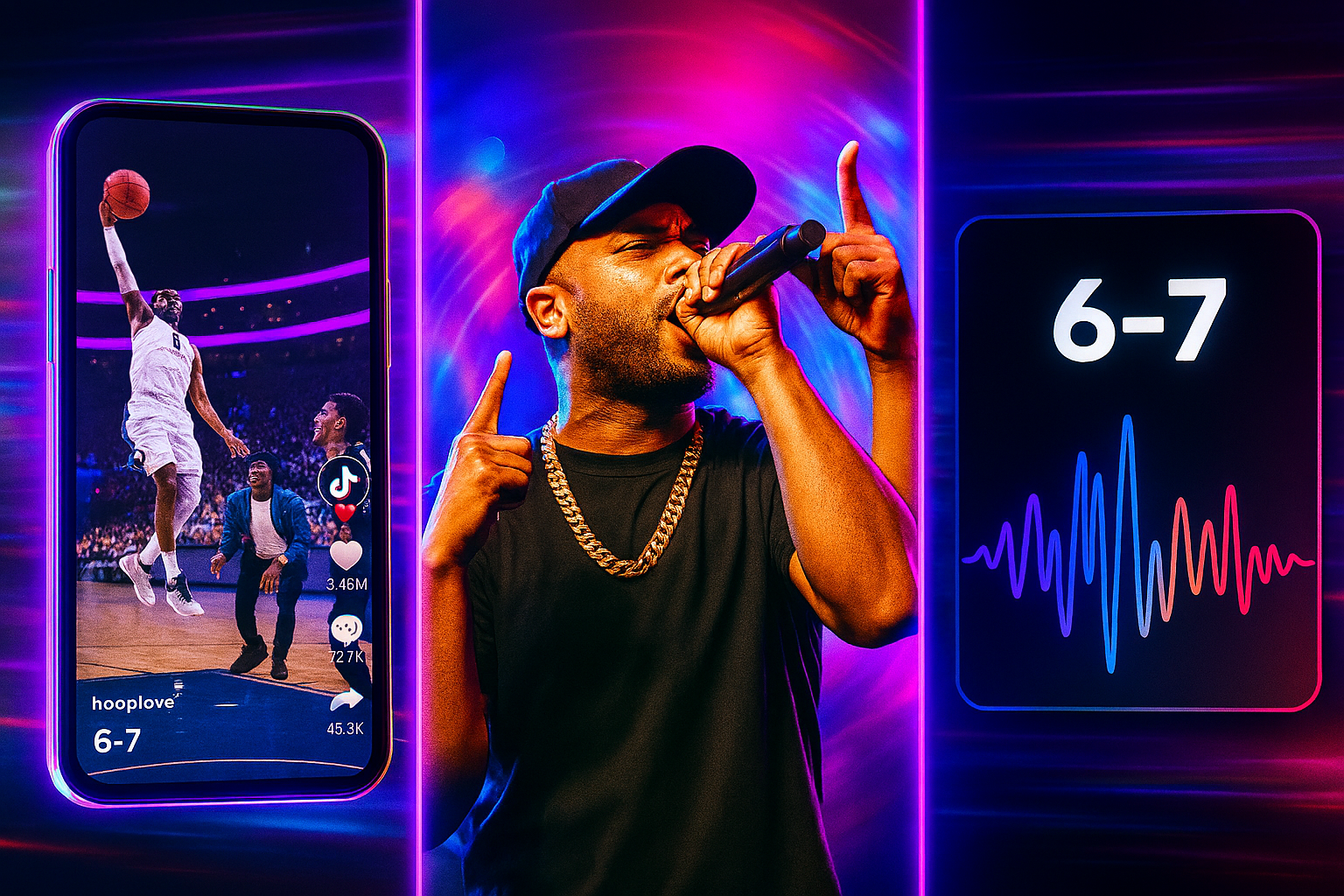
The phrase “6-7” first appeared in the viral 2024 song “Doot Doot (6-7)” by rapper Skrilla. The catchy lyric — “6-7, I just bipped right on the highway” — became popular on TikTok, especially in basketball highlight clips.
It soon connected to LaMelo Ball, who happens to be 6 feet 7 inches tall. His name, paired with the lyric, made the phrase catchy and memeable. From there, it exploded into social media chaos.
Like many internet trends, “6-7” drifted from its original meaning. Teens began shouting it randomly, turning nonsense into shared humor — a classic example of meme slang.
🧩 Introduction: Why Everyone’s Saying “6-7”
If you’ve heard a teenager yell “six seven!” at random, you’re not alone. Parents, teachers, and even social media users have been scratching their heads, wondering what it means.
This guide dives deep into the origins, meanings, and impact of the slang term “6-7.” Whether you’re a curious adult or just trying to keep up with Gen Z and Gen Alpha trends, this explainer will help you understand what’s really going on behind the meme.
💬 What Does “6-7” Mean? (Spoiler: Not Much)
The funny truth is that “6-7” doesn’t have a single clear meaning — and that’s the point. Its appeal lies in ambiguity.
Here are a few common interpretations:
Nonsense slang: It means nothing, just a funny phrase people repeat.
“So-so” rating: Some use it to mean “meh” — like giving something a 6 or 7 out of 10.
Height reference: Linked to basketball or tallness jokes.
Inside joke: Used in random conversations for humor or irony.
The beauty of “6-7” is that it can mean anything (or nothing) depending on tone, timing, and context.
🔥 Why “6-7” Caught On So Fast
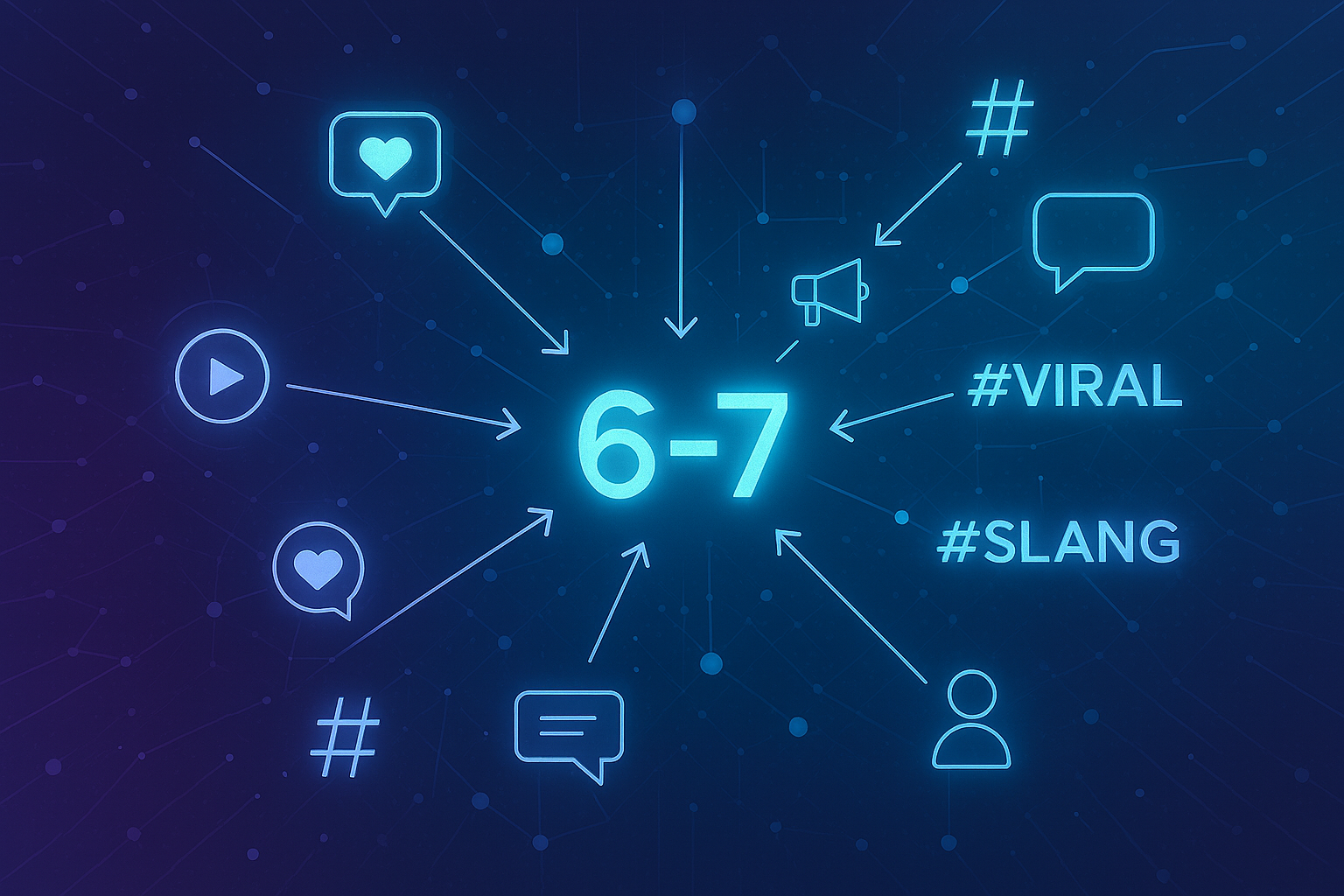
The rapid spread of “6-7” can be traced to a few powerful social forces:
Meme logic: Gen Z humor embraces absurdity and randomness.
Social belonging: Using slang shows you’re part of the in-group.
Viral music: TikTok’s algorithm amplifies catchy sounds.
Flexibility: No fixed meaning means everyone can use it differently.
It’s a perfect storm of humor, rhythm, and relatability — built for the internet age.
📱 How Gen Z Uses “6-7” in Real Life

Online, you’ll see “6-7” all over TikTok captions, comments, and memes. Teens also say it in real life — especially in schools, during conversations, or just to make their friends laugh.
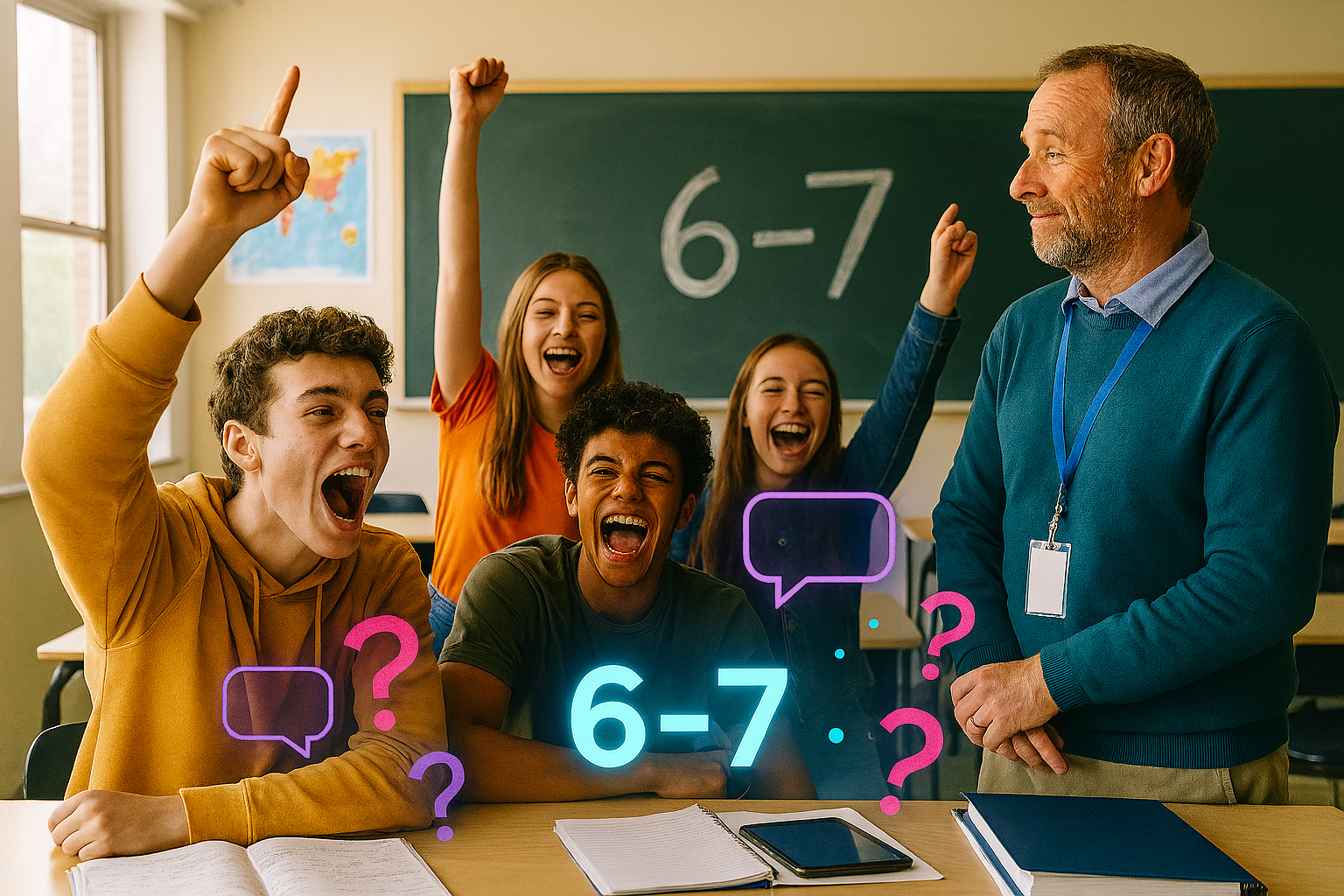
In many classrooms, it’s become such a running joke that teachers have had to ban it for being too distracting. Ironically, that only made it trend harder.
🧩 How to Decode “6-7” When You Hear It
To make sense of it, pay attention to context:
Listen for clues. Was someone mentioning numbers or a score?
Watch body language. Many use a hand gesture like balancing “6” and “7.”
Read the tone. Is it playful or mocking?
Don’t overthink. Often, it’s just for laughs.
The simplest rule: if someone says “6-7” and smiles — it’s probably harmless fun.
🏫 From Classrooms to Culture: The “6-7” Effect
In schools, “6-7” has become part of daily humor — chanted in hallways, whispered in class, and occasionally driving teachers crazy. Some schools have even banned it temporarily.
But it’s also a window into how digital culture blends with real life. It shows how language evolves faster than ever, shaped by social platforms and shared creativity.
👨👩🏫 Tips for Parents and Teachers
If you’re trying to navigate this trend without losing your mind, here’s how:
Stay curious, not judgmental.
Ask what kids think it means — you’ll get interesting answers.
Set boundaries if it disrupts learning.
Teach media literacy using the meme as a discussion starter.
Most importantly — laugh with them, not at them.
Understanding youth slang isn’t about control — it’s about connection.
📊 Real-Life Examples and Memes
TikTok edits: Sports highlights timed to the “6-7” beat.
News stories: Teachers and journalists explaining the phenomenon.
Social media jokes: People using it in random posts for laughs.
It’s the latest in a long line of number-based memes — following viral predecessors like “21” or “1738.”
🌈 Conclusion: The Evolution of Modern Slang
“6-7” might seem meaningless, but it perfectly captures how modern language works: fluid, playful, and fast-moving. It’s less about what it means and more about what it does — uniting people through shared humor and absurdity.
The next viral slang might replace it tomorrow, but “6-7” will be remembered as a snapshot of Gen Z’s linguistic creativity.
✅ Key Takeaways
“6-7” began as a lyric and became a cultural meme.
It usually means nothing — that’s why it’s funny.
It spread through TikTok and classroom culture.
Its popularity shows how Gen Z uses humor to connect.
Understanding it helps bridge generational communication.