
The police are Using Your Smart utility meter data Against You - And What You Can Do about it
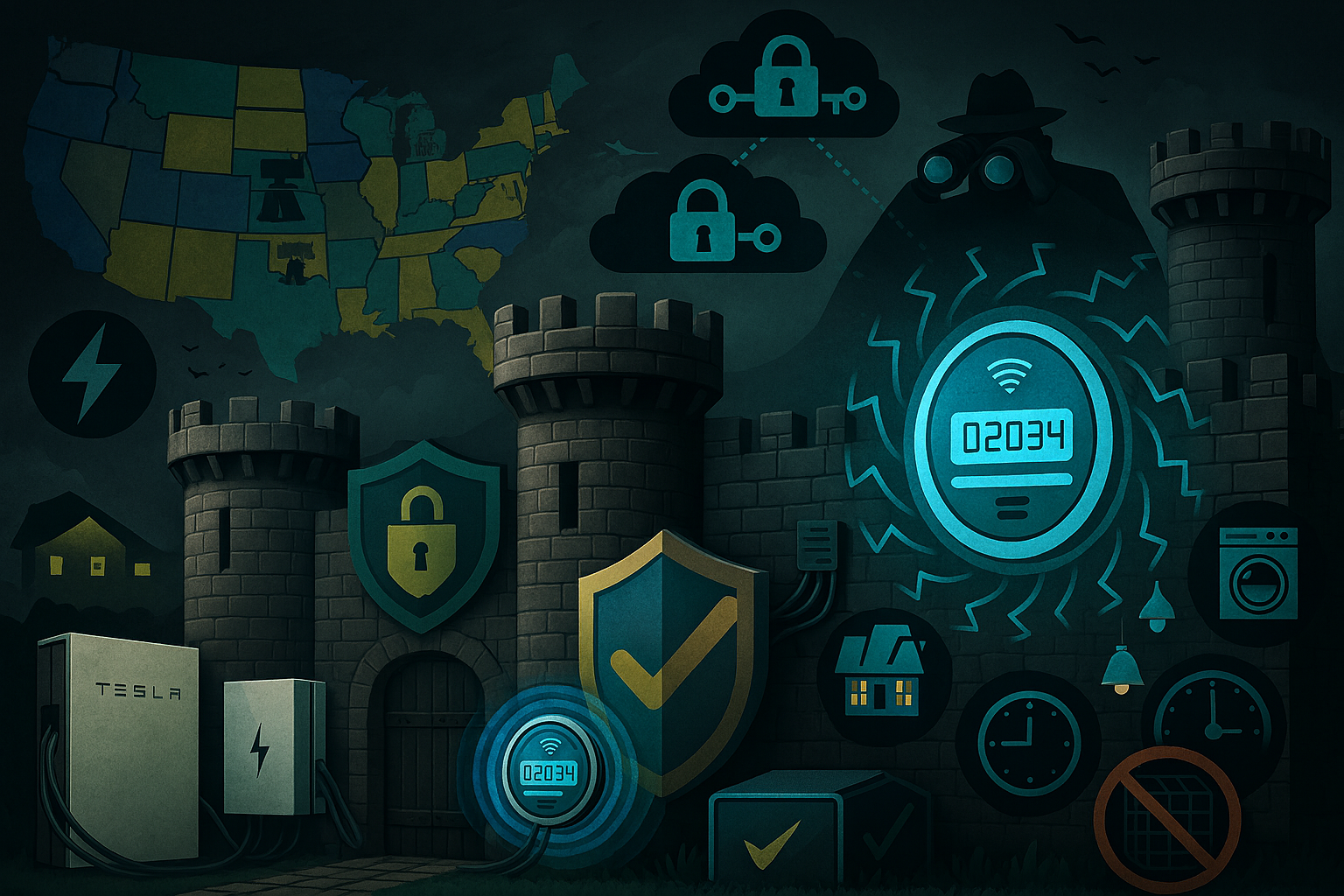
true stories that show the stakes
In 2017, an Arkansas homicide investigation drew public attention when prosecutors invoked smart-water-meter logs to time key events in a suspect’s home. The idea: a spike in water usage at a precise minute corresponded with a timeline of events in the alleged crime. Although the person was not convicted on that basis, privacy advocates decried the lack of clear limits on how meter data might be repurposed.¹
In California, a municipal utility’s internal analytics flagged unusually large electricity use in certain homes and automatically forwarded alerts to law enforcement — a practice that drew criticism in the press and from civil-liberties groups as “spying by power company.”² In at least one case, law enforcement obtained interval usage from a home and tried to infer what appliances were running at a given time as part of their case theory.
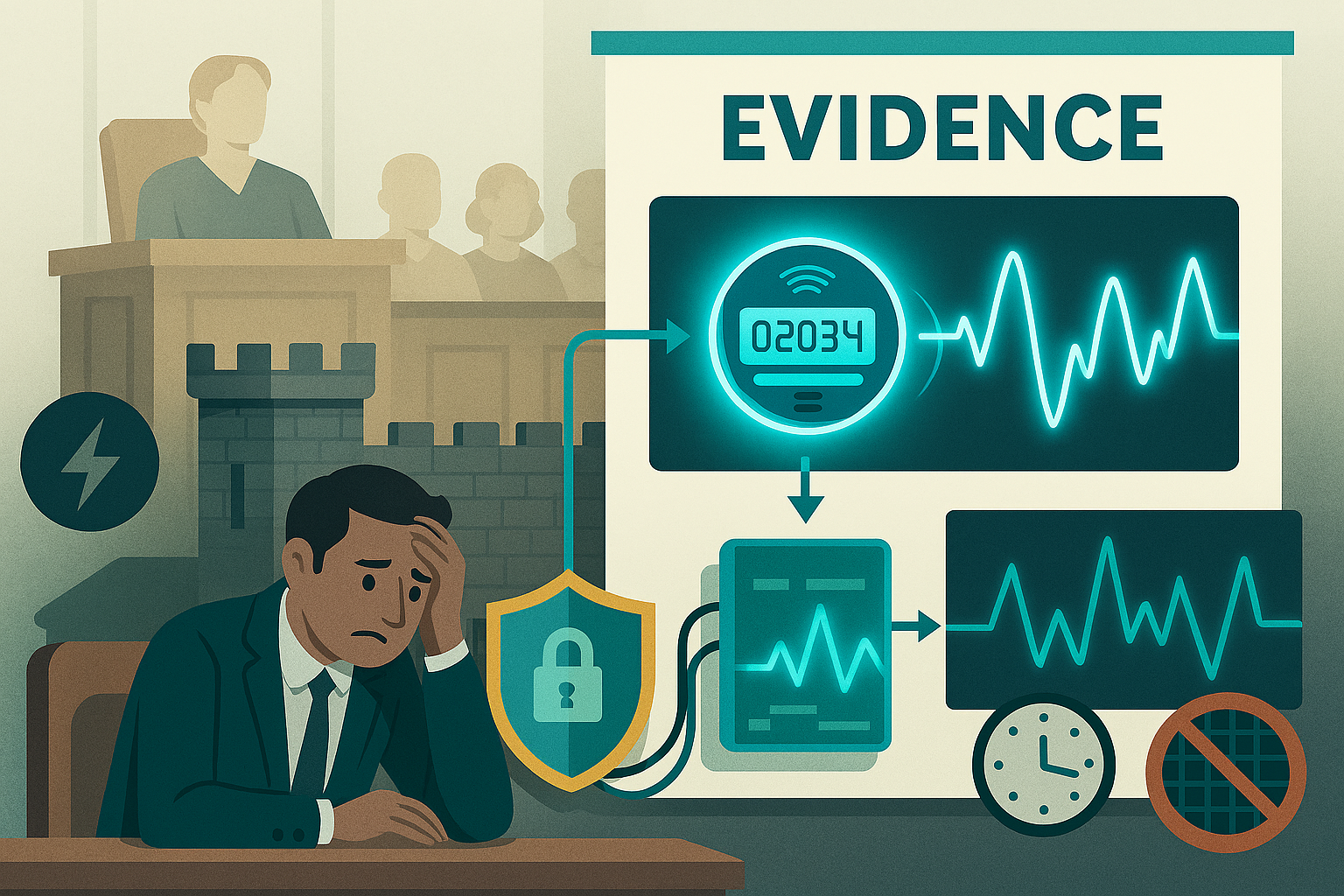
Meanwhile, in Illinois, a group of citizens challenged the City of Naperville’s smart meter program on constitutional grounds. The meters collected fifteen-minute interval data for years, and the plaintiffs claimed that the data revealed intimate details of home life — when people were present, what appliances ran, even routines.
In Naperville Smart Meter Awareness v. City of Naperville, the Seventh Circuit held that the collection was a “search” but one that was reasonable under the Fourth Amendment given the government interest and the level of intrusion.³
These stories show that though smart meters are widely promoted for grid efficiency, billing, and outage management, their data — especially when processed with analytics — can become a powerful tool in investigations. Mistakes or overreliance on such evidence may imperil innocent people.
Quick takeaway
Smart meters and power-use analytics can reveal surprisingly precise information about what appliances and devices are active in your home. Laws and utility practices around accessing and using that data differ widely, and protections often lag. If utility data is used against you, preserving your legal rights, reviewing opt-out policies, and enlisting expert analysis are your best defenses — always with the guidance of counsel.
How smart meters and load disaggregation work (conceptual)
To understand the privacy and evidentiary implications, you need to know how smart meters operate and how analytics can “decode” usage.
What is a smart meter / AMI system?
Smart meters are part of what’s known as Advanced Metering Infrastructure (AMI). Instead of once-a-month manual reads, these meters measure energy (electricity, gas, or water) at regular short intervals (often every 5, 15, or 60 minutes, sometimes finer) and transmit that data back to the utility via wireless or wired networks. The benefits touted include: dynamic pricing, peak-demand management, better outage detection, remote meter reading, and grid balancing.⁴
The World of Dad Jokes - The History of Dad Jokes: From Groan-Worthy Gags to Internet Royalty
Utilities also record voltage, current, and sometimes additional metrics which aid in diagnosing power quality issues and detecting failures. In many systems, the raw interval data is stored for months to years by the utility or third-party data systems.
What is nonintrusive load monitoring / disaggregation?
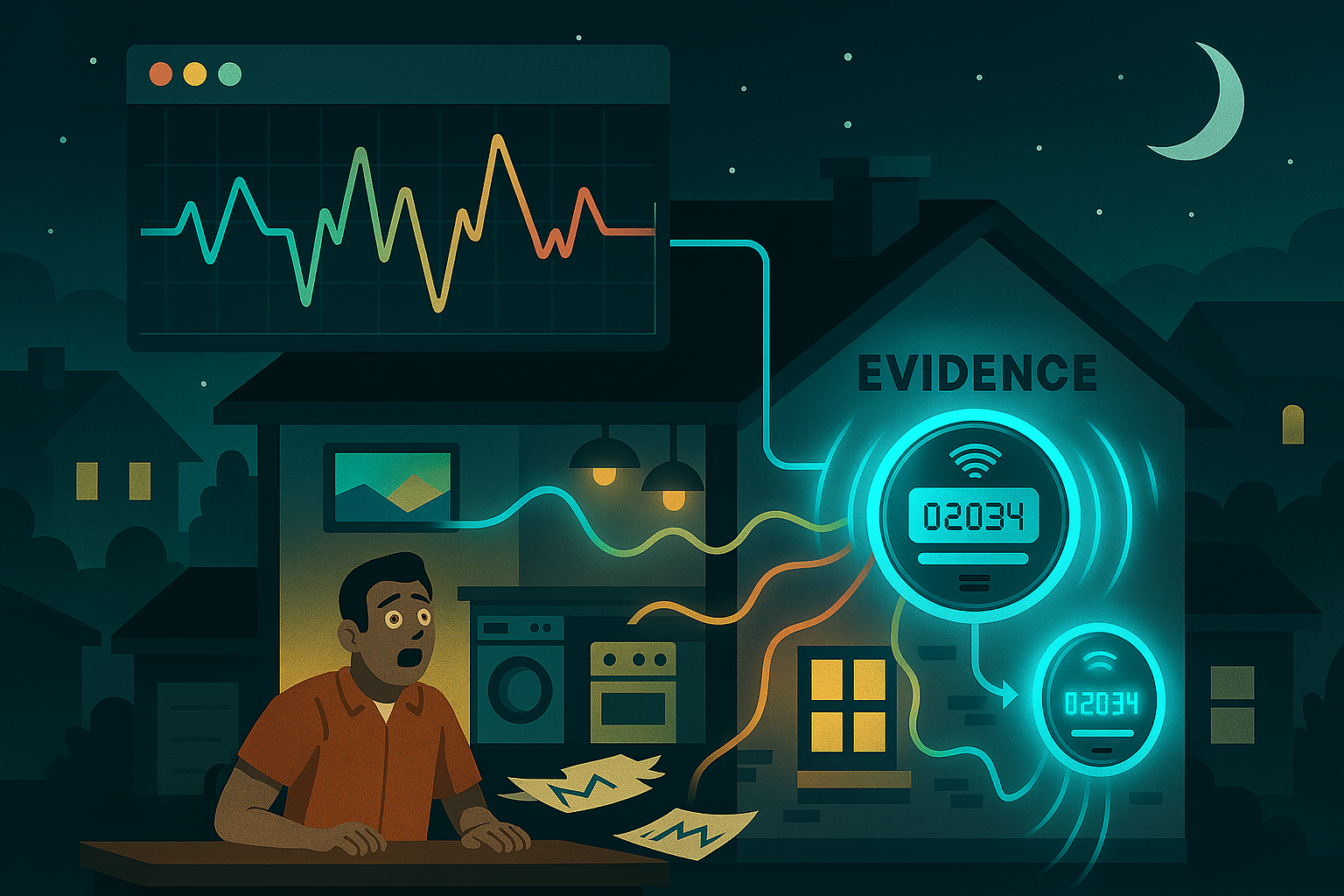
Nonintrusive load monitoring (NILM) is a family of techniques that takes the aggregate power draw over time (i.e. the total electricity consumed at each interval) and attempts to infer which appliances or devices contributed to it. Rather than installing sensors on each device, the idea is to look for signatures — sudden jumps, characteristic cycling, durations, harmonics, or stepping patterns — that correspond to known device classes (refrigerator motors, HVAC compressors, ovens, charger draws, etc.). By comparing many homes and using supervised learning, models can classify segments of aggregate load into categories.⁵
Modern implementations often rely on machine learning or deep neural networks, trained on large “labeled” datasets (homes where appliances are instrumented) so the model learns patterns of usage across a wide variety of homes. The model then “decomposes” future homes’ aggregate profiles. Some systems also exploit side information (time of day, weather, historical patterns) to boost accuracy.
However, there are significant caveats:
Sampling rate matters: Higher sampling (e.g. sub-minute, voltage waveform detail) gives more distinguishing features; coarse 15-minute interval data limits how sharply appliances can be discriminated.
Overlapping loads: Multiple appliances running simultaneously confound the decomposition, since their signatures overlap.
Model generalizability: A model trained on one region or set of homes may not perform well in a home with different appliances, wiring, or usage habits.
Noise and errors: Meter noise, measurement error, power factor variation, voltage fluctuations, and transient inrush currents blur the ideal signatures.
Ambiguity and uncertainty: The model’s output is probabilistic. It may assign likelihoods or confidences — it should not be taken as infallible fact without corroboration.
Because of these limitations, load-disaggregation in forensic or legal settings is more of an inference tool than a direct witness. Any such inference is susceptible to challenge in cross-examination, requiring careful validation and expert testimony.
Documented cases and legal decisions where meter data played a role
Naperville Smart Meter Awareness v. City of Naperville (Seventh Circuit)
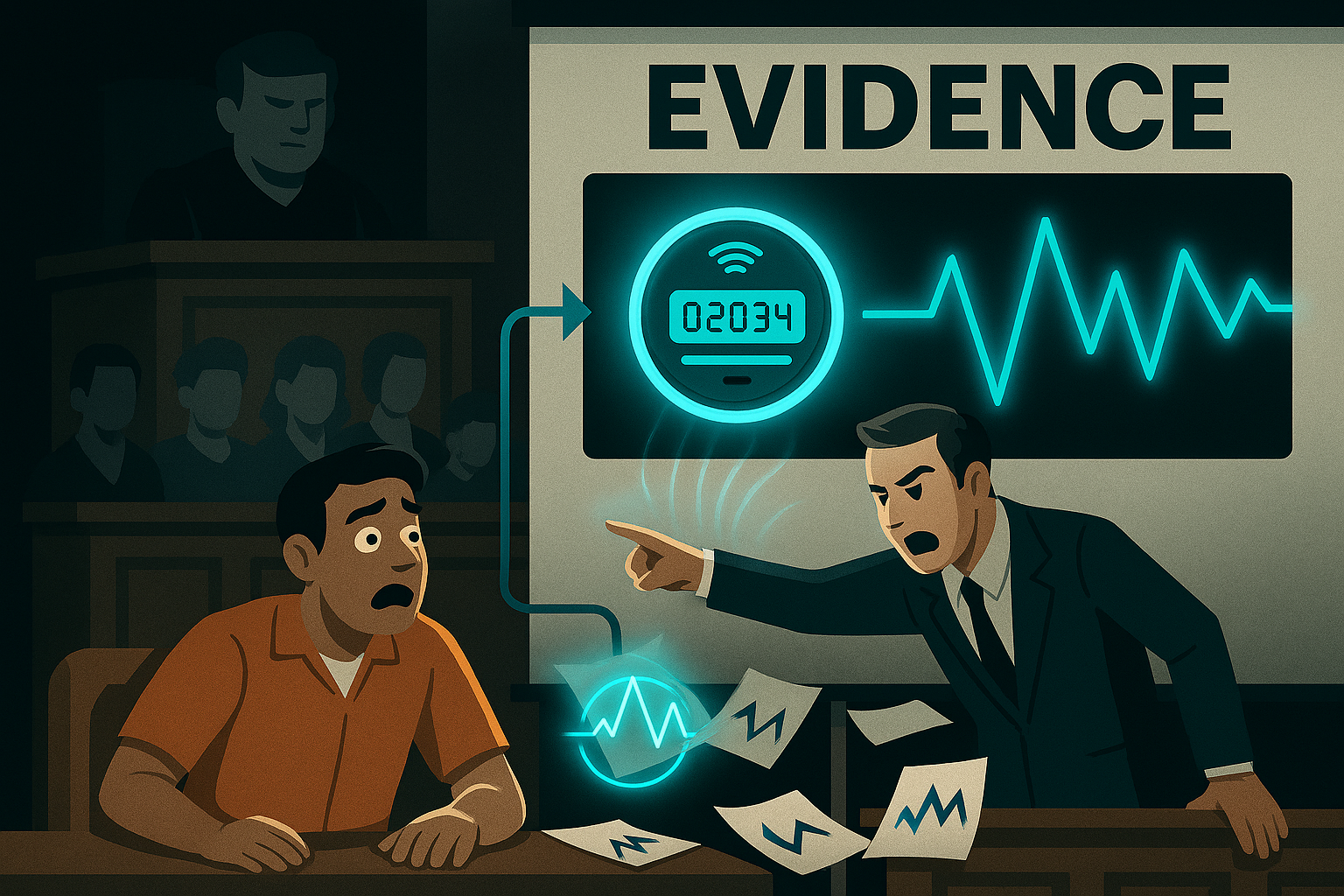
This is one of the more prominent U.S. appellate treatments. Naperville, Illinois, enrolled all homes in a smart meter program collecting 15-minute interval data stored for up to three years. Residents argued that this data revealed intimate details (e.g. appliance usage, home routines, when the home is empty). The Seventh Circuit held (1) the data collection is a “search” under the Fourth Amendment and Illinois Constitution, but (2) that it was reasonable in this instance, because the intrusion was modest, collection was by city (not specifically for law enforcement), and no criminal liability was attached to energy use.³
That case is often cited by utilities and courts as a baseline: smart meter collection may implicate privacy rights, but courts can uphold it under “reasonable search” balancing. However, the decision contains important caveats — it relies on the particular facts (data interval, government interest, absence of law-enforcement intent) and suggests that more granular or law-enforcement–driven data access might change the calculus.⁶
Warrant and privacy debates
Legal commentators have compared access to smart-meter data to cell phone location tracking. In Carpenter v. United States (2018), the U.S. Supreme Court held that accessing historical cell-site location information (CSLI) without a warrant violated the Fourth Amendment.⁷ Some have argued that interval energy or water data is analogous — it can reveal intimate behavioral patterns over time — and thus law enforcement should require a warrant.
Several lower courts have begun to question whether demands for interval data (beyond simple monthly totals) should be treated differently. In some instances, courts have required warrants or higher justification for access to high-resolution utility data rather than standard billing records.⁸
However, other courts caution that meter data might be considered “business records” of a utility (a third-party), which traditionally have lower expectations of privacy.⁹ Also, some authorities have held that smart meter reads constitute a permissible search without warrant under certain conditions, especially if the data is collected as part of routine utility operations rather than law enforcement.⁵
Cases with utility records used in investigations
In Alaska, the DEA obtained power usage records (not necessarily fine-grained smart meter data) from utility companies under administrative demand to support a drug cultivation investigation. A 9th Circuit decision held that such records — as business records held by a third party — could be accessed without a warrant under the Comprehensive Drug Abuse Prevention and Control Act, so long as they are deemed relevant to the investigation.¹⁰
Some criminal cases (not always publicized) have cited interval meter data to correlate appliance use (e.g. grow-lamp LEDs, HVAC loads consistent with indoor cultivation) with suspected illegal activity. In those, defense motions sometimes press for suppression or expert scrutiny of data accuracy and modeling assumptions.
Taken together, the case law is unsettled and fact-dependent. Whether meter data is admissible, what level of detail is permissible, and what protections apply will vary by jurisdiction, utility rules, and the facts of the investigation.
State opt-outs, utility policies, and data access frameworks
Opt-out policies by state and utility
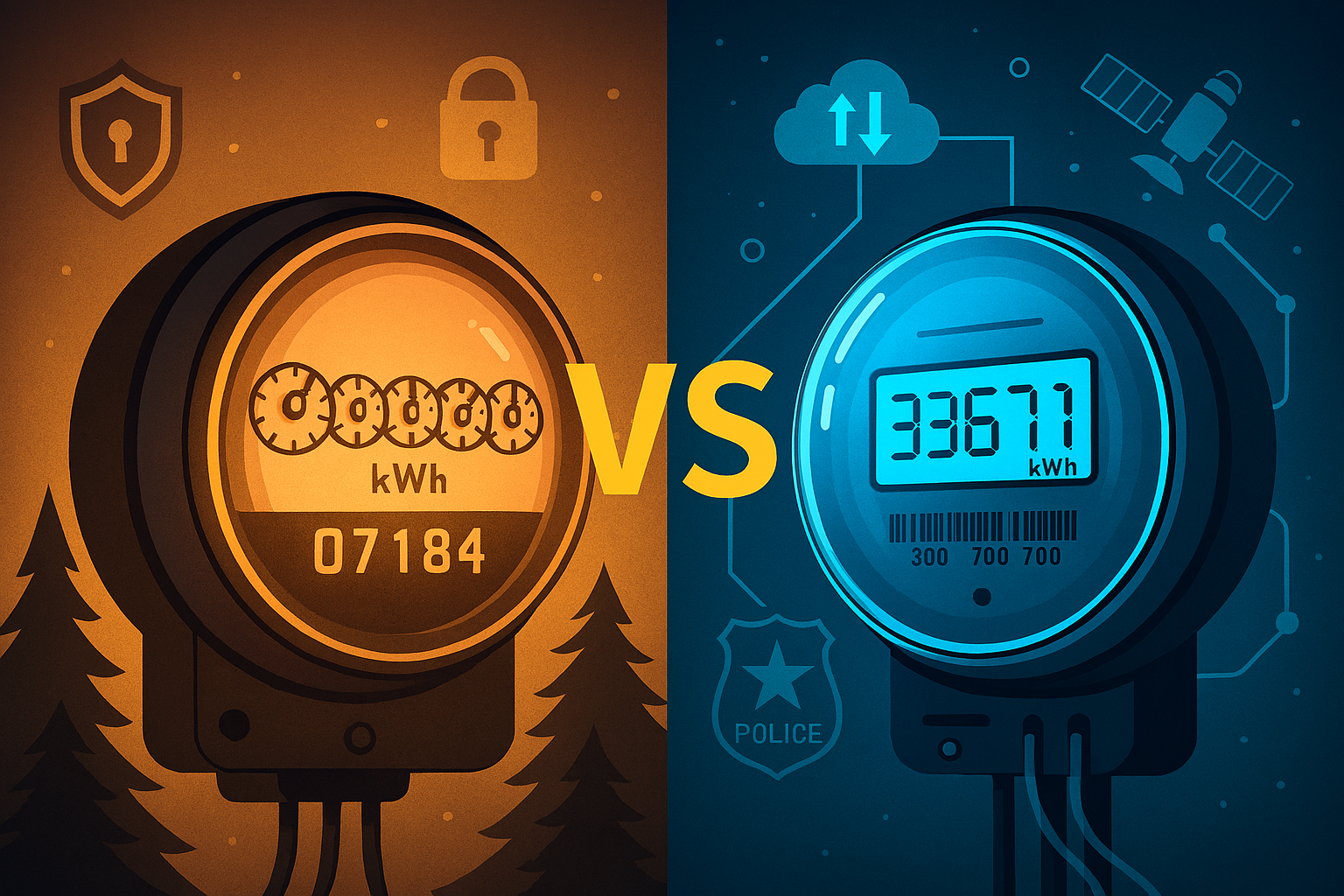
Opt-out policies vary widely, as do the associated fees and service tradeoffs. According to the National Conference of State Legislatures, at least seven states have policies allowing smart meter opt-outs (or have required utilities to provide alternatives).¹¹ Many others leave this decision to the utility or commission case-by-case processes.
Some illustrative examples:
California: The California Public Utilities Commission sets uniform opt-out fees: a $75 one-time charge and a $10 monthly fee (for up to three years). Low-income customers may pay reduced rates.¹²
Maine: After state statute, utilities must offer opt-out. For instance, customers may pay a one-time $40 fee and $15.66 monthly to retain an analog meter, or alternative non-communicating smart meters with transmitters disabled.¹¹
Missouri: One reported program has a $150 one-time fee and $45 monthly charge.¹¹
Nevada: An approved program includes a $52 one-time fee and $9 per month.¹¹
Ohio: The Ohio Administrative Code requires utilities to offer opt-out through tariffs subject to commission rules.¹¹
Oregon: Some utilities allow opt-out with monthly fee; the commission has adopted tri-annual reads for opt-outs.¹¹
Pennsylvania: Under Act 129, the law mandates smart meter deployment and does not permit opt-out.¹¹
Eversource (some New England areas): Offers a non-communicating meter in place of smart meters if you opt out, but charges a $34 monthly manual read fee plus a one-time $42 meter exchange.¹³
SMUD (Sacramento Municipal Utility District, CA): Opt-out by paying a $145 setup and $14 monthly charge; the meter is read manually every three months.¹⁴
These options often come with tradeoffs: loss of remote outage detection, slower billing updates, fewer customer-data tools, and manual reading costs billed to opt-out customers.⁴
Because regulations evolve, it’s critical to check your state’s public-utility commission and your utility's own policy to see whether opt-out is allowed, what fees apply, and what service limitations exist.
Data access, retention, and utility sharing policies
Beyond opt-out, other regulatory and contractual details matter:
Data retention: How long does a utility keep interval-level records? Many utilities retain multiple years; others purge high-resolution data after a shorter period. The longer the retention, the more forensic potential.
Sharing with third parties: Some utilities share usage data with third-party data analytics firms, energy management services, or law enforcement under certain conditions (e.g. subpoena or warrant).
Consumer access and corrections: Some jurisdictions require utilities to provide users with their own interval data (for example under state data-access laws or consumer disclosure regimes). Consumers may have the right to inspect, correct, or delete portions of usage data in some states or under privacy laws.
Disclosure limits and warrants: Some laws or utility regulations mandate that law enforcement must show probable cause and obtain a judicial warrant for high-resolution usage data, not just subpoena or administrative demand. In other jurisdictions, prosecutors or police may use subpoenas or internal demands to the utility, unless challenged.
Understanding your utility’s tariff, the state public-utility commission orders, and your state privacy statutes is crucial to assessing what’s legally permissible in your area.
Lawful privacy-forward defenses and dispute strategies
Protecting Privacy from Smart Meters: Opt-Out Options and Strategies
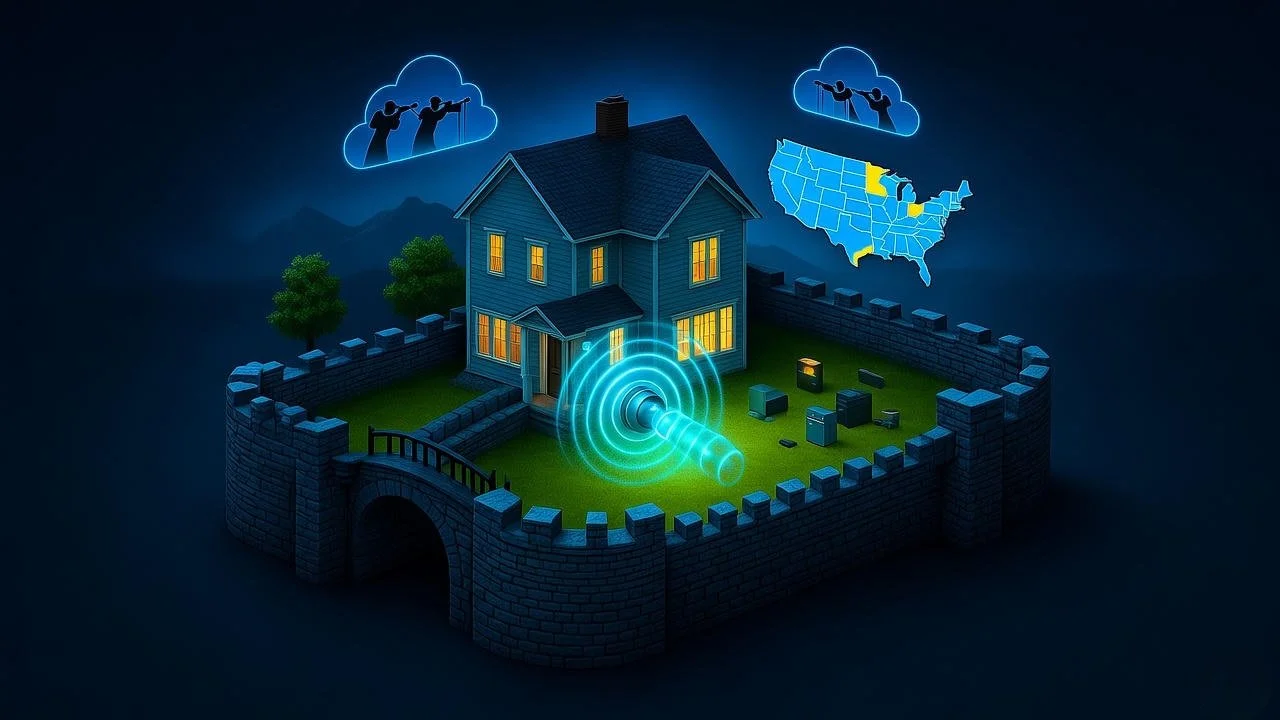
Smart meters, while efficient for energy utilities, raise significant privacy concerns by tracking detailed household energy usage that could be accessed by law enforcement or government agencies. This can potentially lead to unfounded suspicions or invasions of privacy. Below is a summary of key strategies to mitigate these risks, based on expert insights.
States with Opt-Out Programs
Many U.S. states offer mechanisms to opt out of smart meter installations or limit data collection.
Comprehensive list of states with some form of opt-out program:
Arizona, California, Florida, Georgia, Hawaii, Illinois, Indiana, Iowa, Kentucky, Louisiana, Maine, Maryland, Massachusetts, Michigan, Missouri, Nevada, New Hampshire, New Jersey, New York, North Carolina, Ohio, Oklahoma, Oregon, Pennsylvania, Rhode Island, South Carolina, Texas, Vermont, Washington, Wisconsin, Wyoming.
Check local utility policies and state laws to exercise these rights.
Strategy 1: Install Local Energy Storage
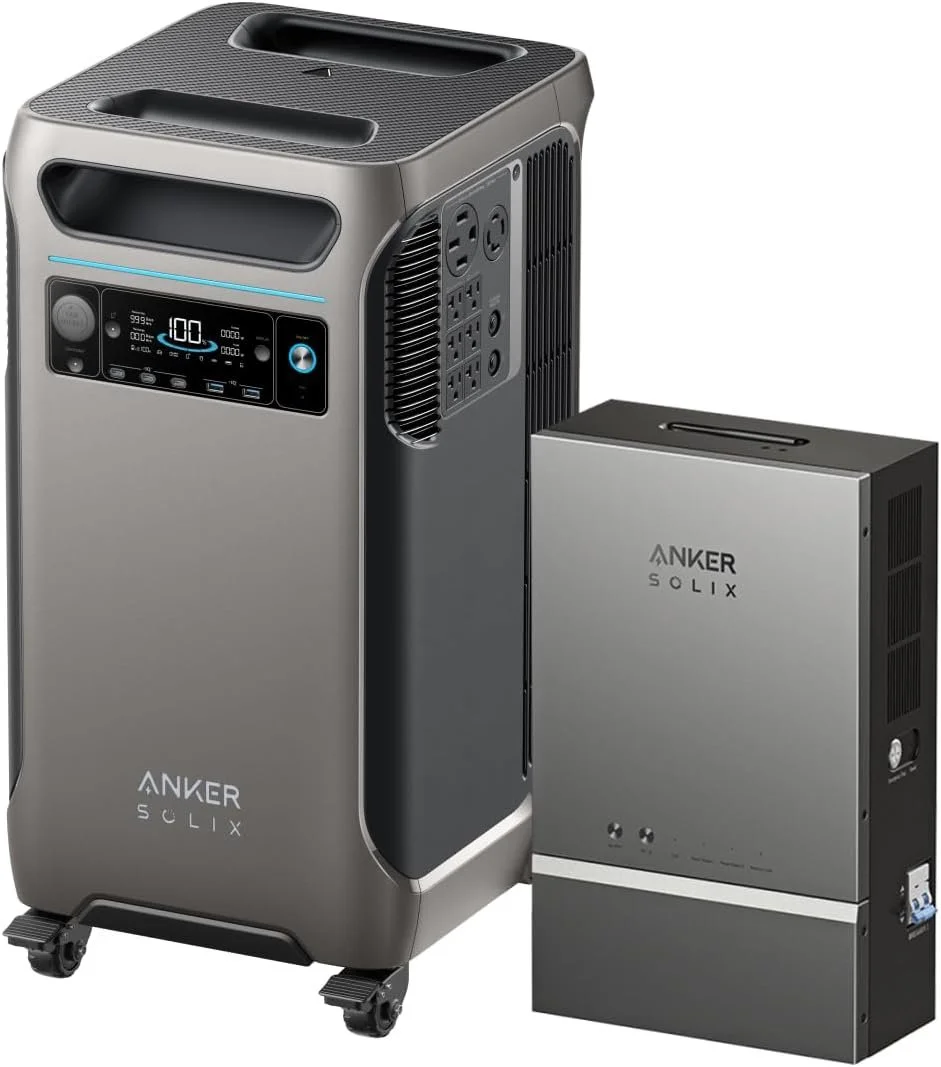
A proactive approach involves using home battery systems or smart electric vehicle chargers as buffers. These devices charge steadily from the grid and supply variable power to your home internally, masking spikes from individual appliances. This "flattens" the load profile visible to utilities, preventing utilities or authorities from inferring specific device usage or routines.
Strategy 2: Introduce Energy "Noise" Through Management
Privacy experts recommend scheduling appliances (e.g., dishwashers) to run at random or off-peak times, such as late at night. This disrupts predictable patterns, adding "noise" to data that could otherwise reveal daily habits. It's akin to drawing curtains— not foolproof, but it obscures visibility for potential snooping.
Caution on Signal Shielding or Jamming
Some online forums suggest enclosing smart meters in Faraday cages or similar blockers to disrupt data transmission. However, this is strongly discouraged: It's often illegal under anti-tampering laws, risking fines, service disconnection, or legal penalties. Moreover, data is still recorded locally and may upload later. Opting out legally is a safer alternative.
Future Outlook: Privacy-Preserving Technologies
Emerging innovations include "privacy-preserving" smart meters using homomorphic encryption or secure aggregation. These transmit only essential billing or aggregated data, hiding granular details unless needed for emergencies. Pilot programs, particularly in Europe, show promise by limiting utility access to coarse neighborhood-level info, potentially influencing U.S. adoption.
In essence, smart meters can inadvertently "snitch" on innocent activities, turning your home from a private sanctuary into a surveilled space. Prioritize opting out where possible, stay informed on state regulations, and explore tech solutions to reclaim control over your energy data and privacy.
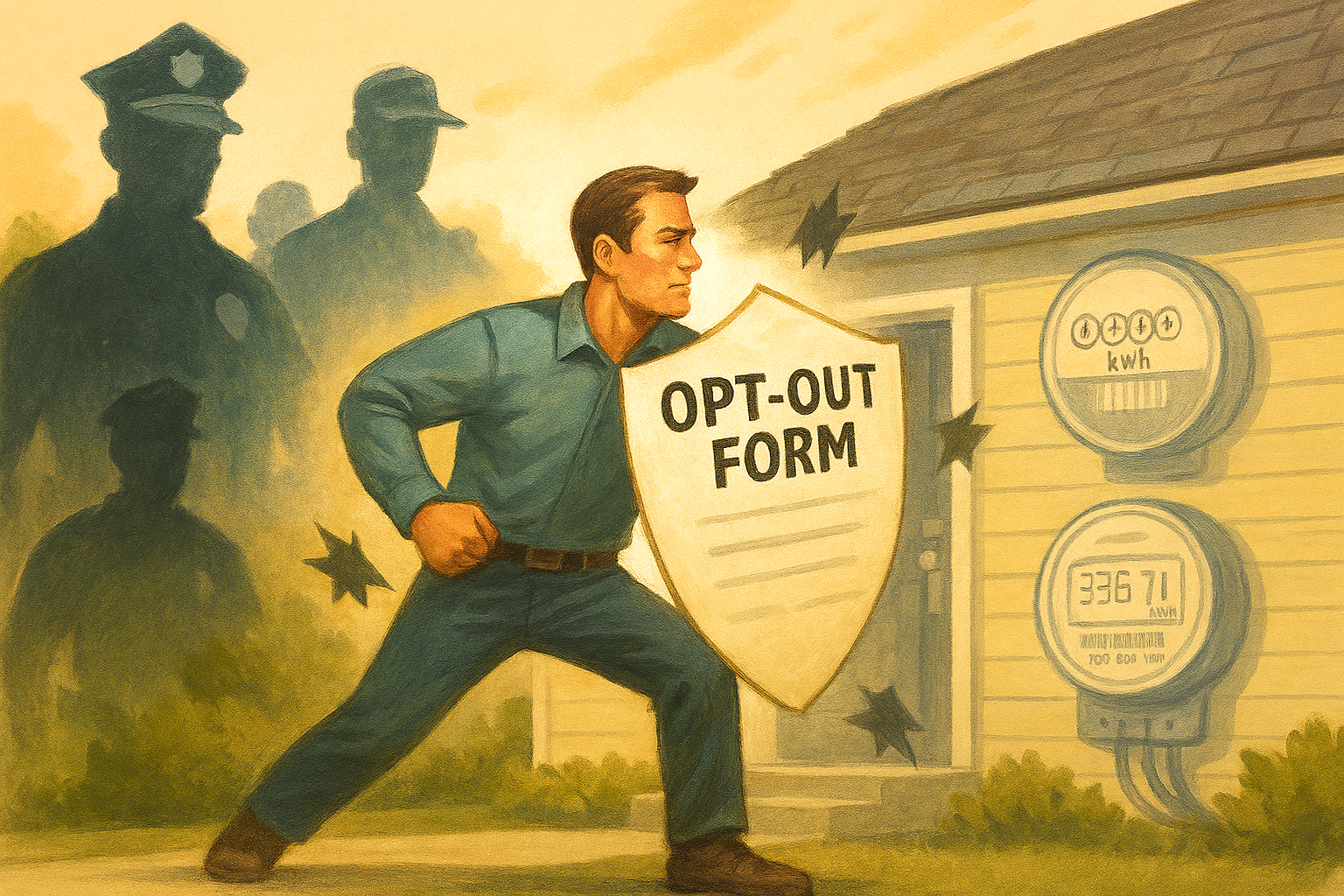
Know and enroll in your opt-out or noncommunicating meter program
If your state and utility allow you to opt out of smart meters (or revert to a non-communicating meter), that is often the most straightforward structural layer of limitation. Even though the utility may charge a fee, many people see that as the cost of reducing exposure to analytic inference. Be sure to get written confirmation of enrollment, ask what data will (or will not) be collected, and retain all communications.
Use the utility's data-access and correction rights
If your utility and state allow you to access interval data, request your full usage records and examine them for anomalies or irregularities. If you notice errors (missing intervals, spikes, data gaps), obtain documentation from the utility to explain them. A well-documented discrepancy may serve as a basis to challenge the utility’s data integrity or chain-of-custody should any meter-derived evidence be used against you.
Lock in usage documentation and contemporaneous logs
Maintain logs or independent corroborating data (such as your own appliance timers, smart-home logs, or video surveillance) to contrast against utility data. This is not about hiding anything — it’s about building a robust factual record. If meter data is used as evidence, showing alternative plausible explanations or real-world discrepancies can help a defense expert show that the inference is not definitive.
Expert scrutiny and challenge in court
If authorities attempt to introduce meter-derived inferences, demand full access to the raw interval data and metadata (timestamps, meter serial numbers, transformations applied). Engage an independent expert in electric load analysis to:
Re-run or audit the model or inference process,
Test for alternative load explanations,
Assess error margins, noise sensitivity, and confidence intervals,
Inspect for gaps, missing data, or dropped intervals, and
Challenge chain-of-custody (was the data altered, manipulated, or aggregated improperly?).
Courts may suppress or limit evidence if the inference is shown to be speculative or unreliable.
Preservation letters and motions to quash
If you become subject to an investigation or subpoena, issue a preservation letter to the utility demanding it preserve all meter records, logs, and metadata (don’t let them purge data). Your lawyer can file motions to quash or limit overly broad requests. In jurisdictions requiring a warrant for digital content, argue that an order for interval data must meet probable-cause thresholds rather than lower subpoena standards.
Engage privacy advocacy and public transparency
File public records requests or PUC complaints demanding clarity on utility data-sharing practices, warrant thresholds, and transparency reports for law enforcement access. Participate in utility rate cases or PUC proceedings to push for stronger protections (e.g. mandated warrant thresholds, retention limits, and user opt-outs). Support or join civil-liberties groups pushing for statutory reform.
What the public and policymakers should push for
To balance grid modernization and privacy rights, the public should demand:
Mandatory warrant requirement for high-resolution interval data
Law enforcement should require a judicial warrant — not just a subpoena — to access fine-grained meter logs that can reveal behavior patterns over time.Retention limits for fine-grained data
Utilities should purge high-frequency data after a short period (e.g. 90 days), retaining only coarser aggregates for longer archival billing purposes.Mandatory customer notice and transparency
Utilities should be obligated to notify customers if their meter data is requested by law enforcement, and issue transparency reports on how often such requests occur, how many are granted, and under what standards.Uniform, low-cost opt-out and non-communicating meter options
Opt-out programs should be standardized, affordable, and not punitive. Removing extra charges for customers wanting more privacy would reduce the inequity of privacy being a luxury.Independent audit, oversight, and accountability
Public-utility commissions should audit utilities’ sharing practices, require independent security and privacy reviews, and hold utilities accountable if data is misused or improperly disclosed.Strong legal protections and penalties for misuse
Statutory prohibitions and civil liability should apply if meter data is used outside legal bounds, or if analytics misleads courts or prosecutors.
Organized citizen pressure, public commenting in utility proceedings, and support of privacy-oriented nonprofit groups (e.g., EFF, the ACLU, local consumer-privacy councils) can move this agenda forward.
Resources & further reading
National Conference of State Legislatures — Smart Meter Opt-Out Policies (state summaries)
SmartMeterEducationNetwork — Opt-Out Status in Other States
Naperville Smart Meter Awareness v. City of Naperville (7th Cir.) decision and analysis
“The Fourth Amendment in Your Shower: Naperville, Smart Grids, and Inference” (Law review article)
EFF / privacy-tech writing on smart meter surveillance
Utility opt-out pages (PG&E, SMUD, Eversource, etc.)
Academic NILM surveys / review articles
Legal commentary comparing Carpenter v. United States and meter data access